

Skip to content
All life stages Budgeting 4 min read

How Budget Planning Improves Daily Life

A short guide on why tracking income and expenses helps reduce stress, spot patterns early, and make clearer decisions — with insights for students, professionals, and retirees.

  • Budgeting helps you see where money goes before a problem grows.
  • A simple plan reduces stress even when income is fixed or irregular.
  • People who track spending often feel more in control of their finances.

Resource explainer

How budgeting fits your week

Without a plan

Money can feel uncertain.

  • Unclear where spare cash goes
  • Surprises when bills land
  • Harder to spot rising costs

With a simple budget

You see the picture clearly.

  • Income and essentials mapped
  • Seasonal costs planned for
  • Adjust early when something changes

Statistics and charts

Budgeting in Ireland — by the numbers

Budgeting practices in Ireland

Percentage of people who do each activity — CCPC Financial Wellbeing 2023

CCPC Financial Wellbeing in Ireland 2023

Try it now

Try the Budget Planner

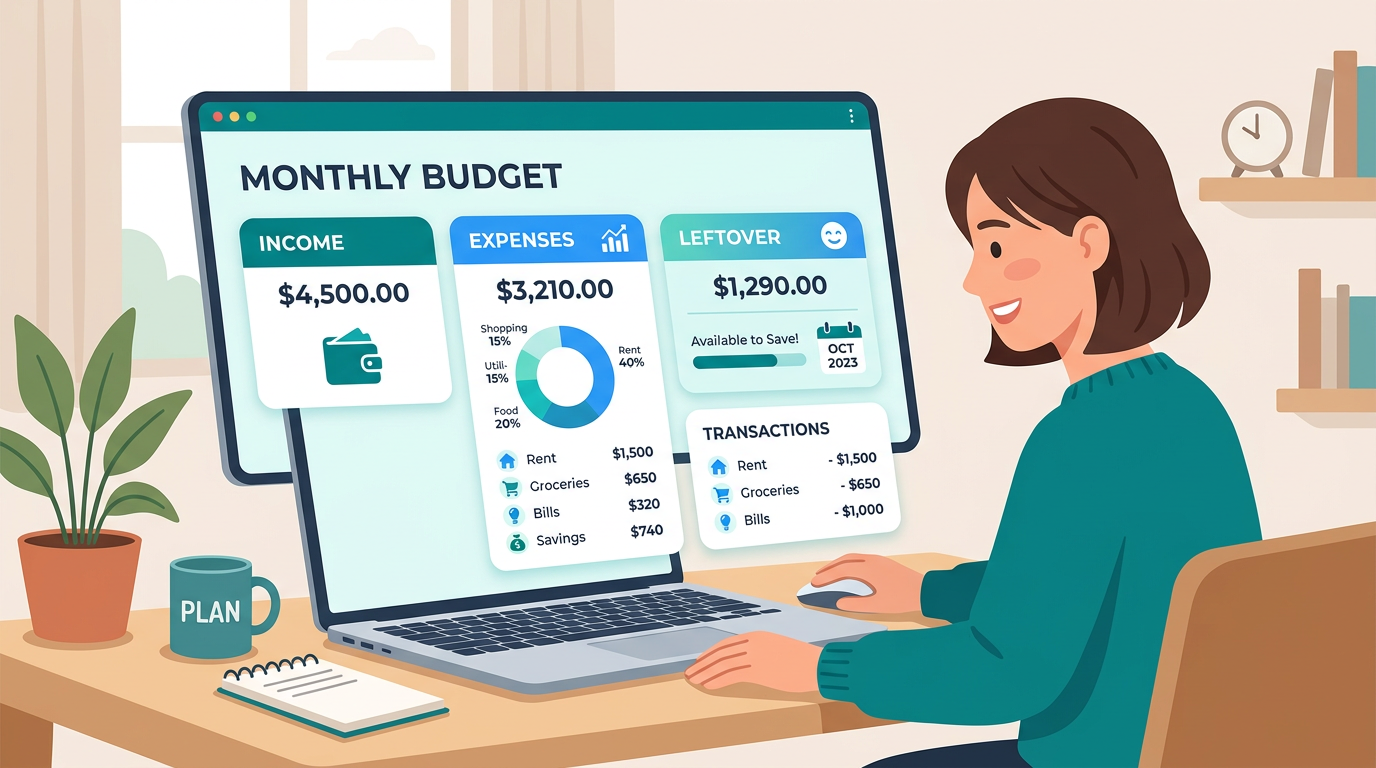
Track income and expenses, see your leftover, and spot trends over time. Free to use, no sign-up required to explore.

Open Budget Planner

Key figures

Budgeting and money in Ireland

93.9%

make day-to-day decisions about their own money

CCPC 2023

1 in 3

feel they are only just getting by financially

CCPC 2023

€1,000+

average weekly household spending in Ireland

CSO Household Budget Survey 2022–2023

Budgeting reduces money stress

In Ireland, 64.5% of people make a plan to manage their income and expenses, and 60.3% keep a note of their spending. Those who do often report feeling more in control of their money.

A budget does not need to be perfect. Even a rough plan of income and essential costs can reduce anxiety by making the month ahead feel less uncertain. Our Budget Planner lets you track income and expenses in one place, so you can see your leftover at a glance.


Spot patterns before they become problems

When you track income and expenses over time, you start to see patterns: seasonal costs, one-off bills, or spending that creeps up. That awareness lets you adjust early instead of reacting when a problem has already built up.

A short monthly review is often enough to notice what changed and what needs attention for the next month. The Budget Planner shows your trends over time, so you can compare months and spot changes quickly.

One plan for every life stage

Students often have irregular income from grants, part-time work and family support. A budget that separates fixed costs from flexible spending helps avoid last-minute gaps. The Budget Planner supports all income types and expense categories.

Professionals can use a budget to manage cash flow, plan for mortgage repayments, and see how much is left for savings or goals. Track housing, transport, debt and savings in one view.

In retirement, income may be fixed but costs still vary — heating, home repairs, health. A budget that includes seasonal and annual costs makes a fixed income feel more manageable.

Keep exploring

Related resources